Visa Accept: Built-in App to Turn Smartphones Into Payment Terminals
Overview
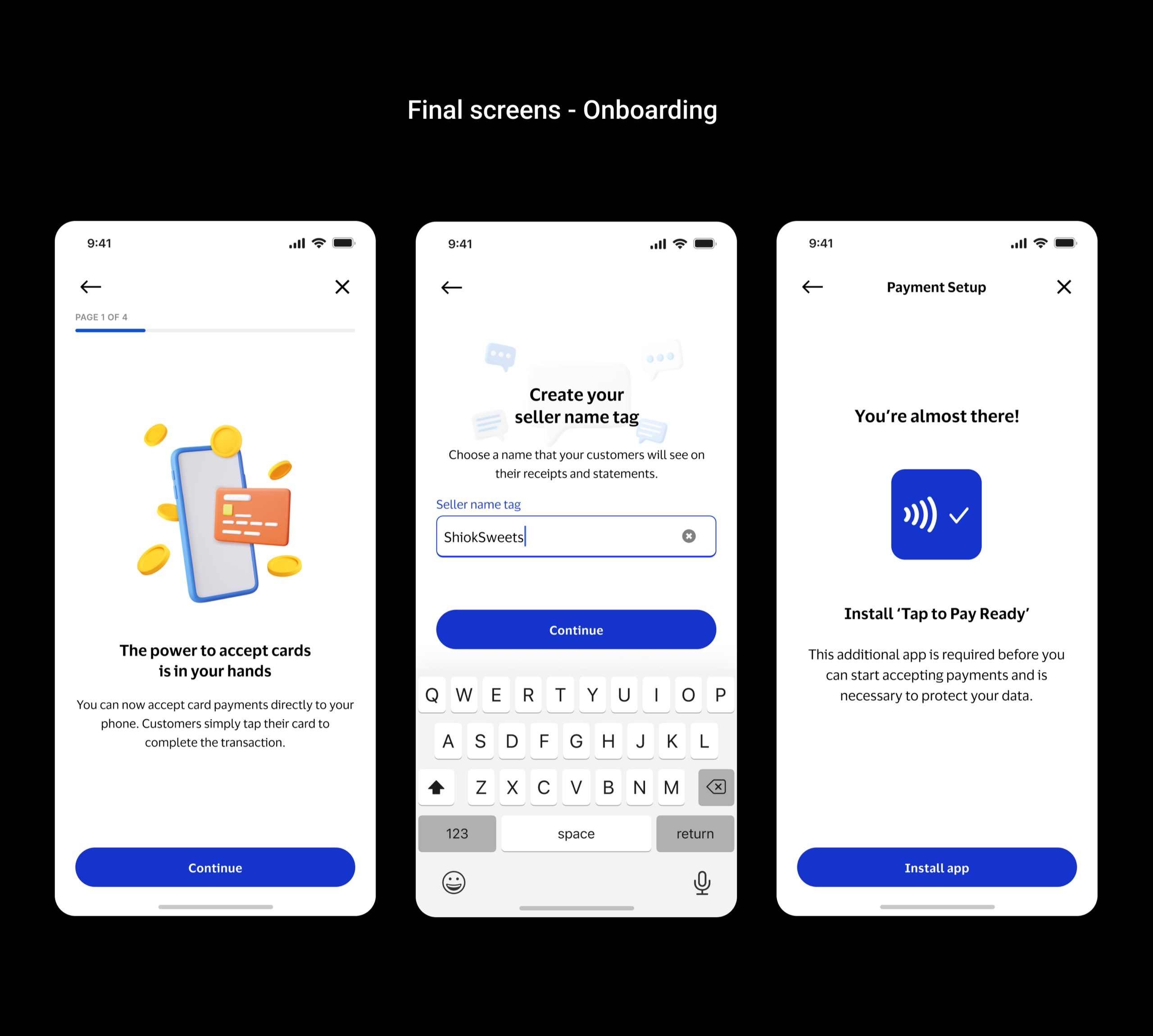
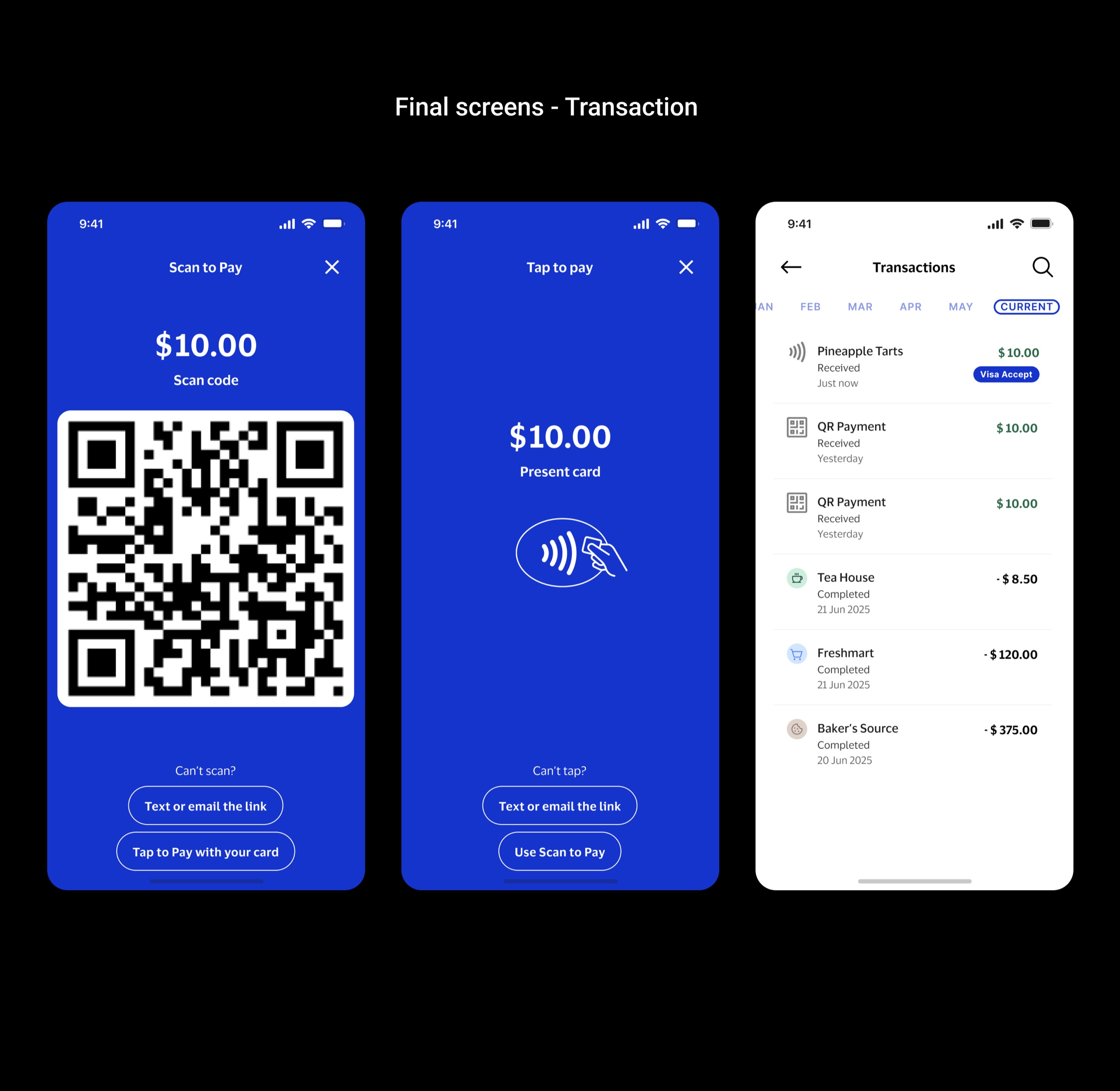
Visa Accept enables banks to offer Tap to Phone directly inside their mobile banking apps, allowing eligible Visa cardholders to accept in-person card payments without dedicated hardware.
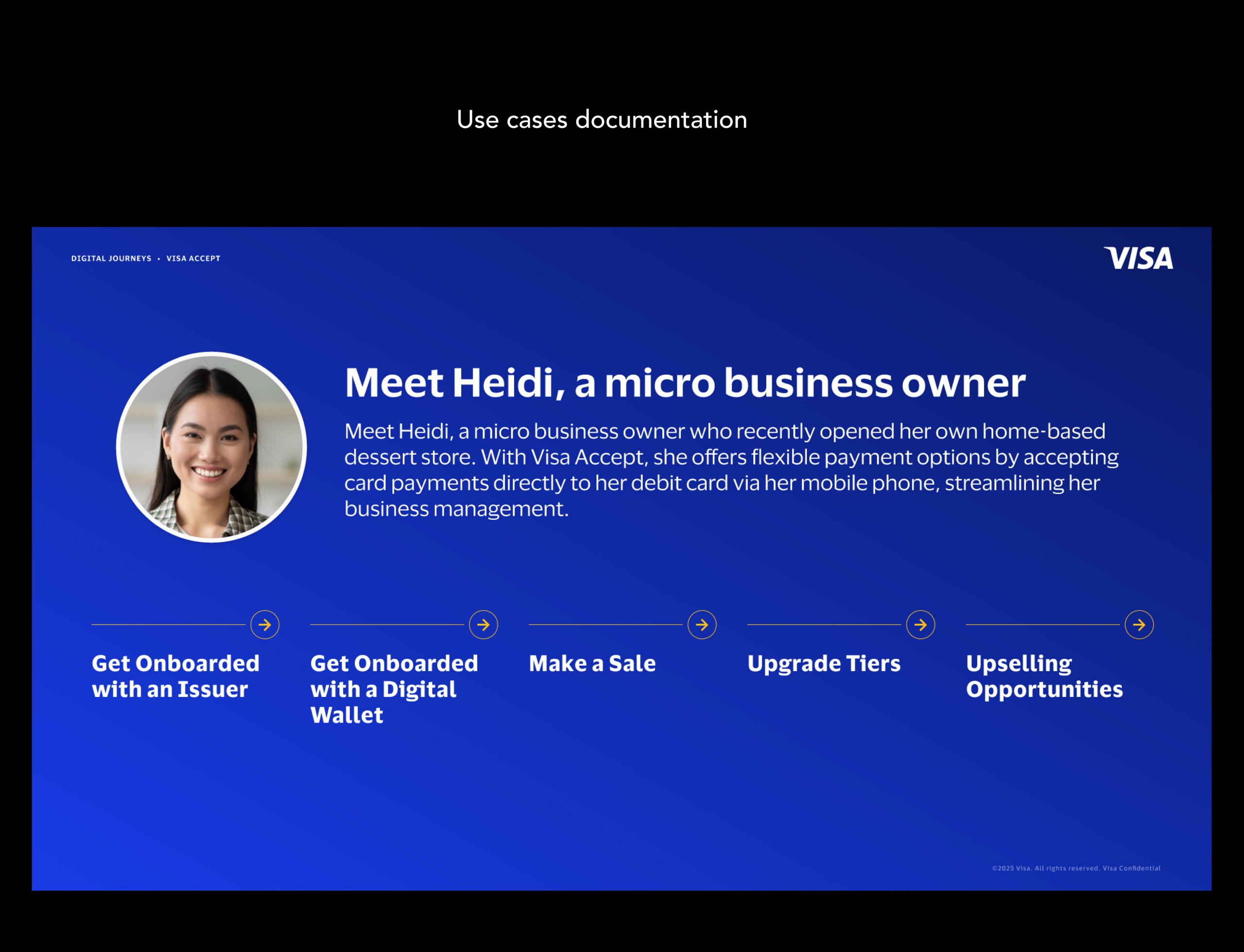
The product targets micro merchants who traditionally rely on cash or peer-to-peer transfers, giving them an easy way to start accepting card payments using only their existing smartphone.
When I joined the project, development was already well underway across distributed teams in China, the United States, and Germany. However, multiple product management transitions and asynchronous collaboration had left the project without a clear picture of its implementation status.
Rather than immediately designing new features, my first responsibility became rebuilding that shared understanding so the team could confidently move the product toward launch.
The challenge
The biggest challenge wasn’t designing new interfaces. It was establishing clarity across a product already in development. Existing documentation no longer reflected the implemented experience.
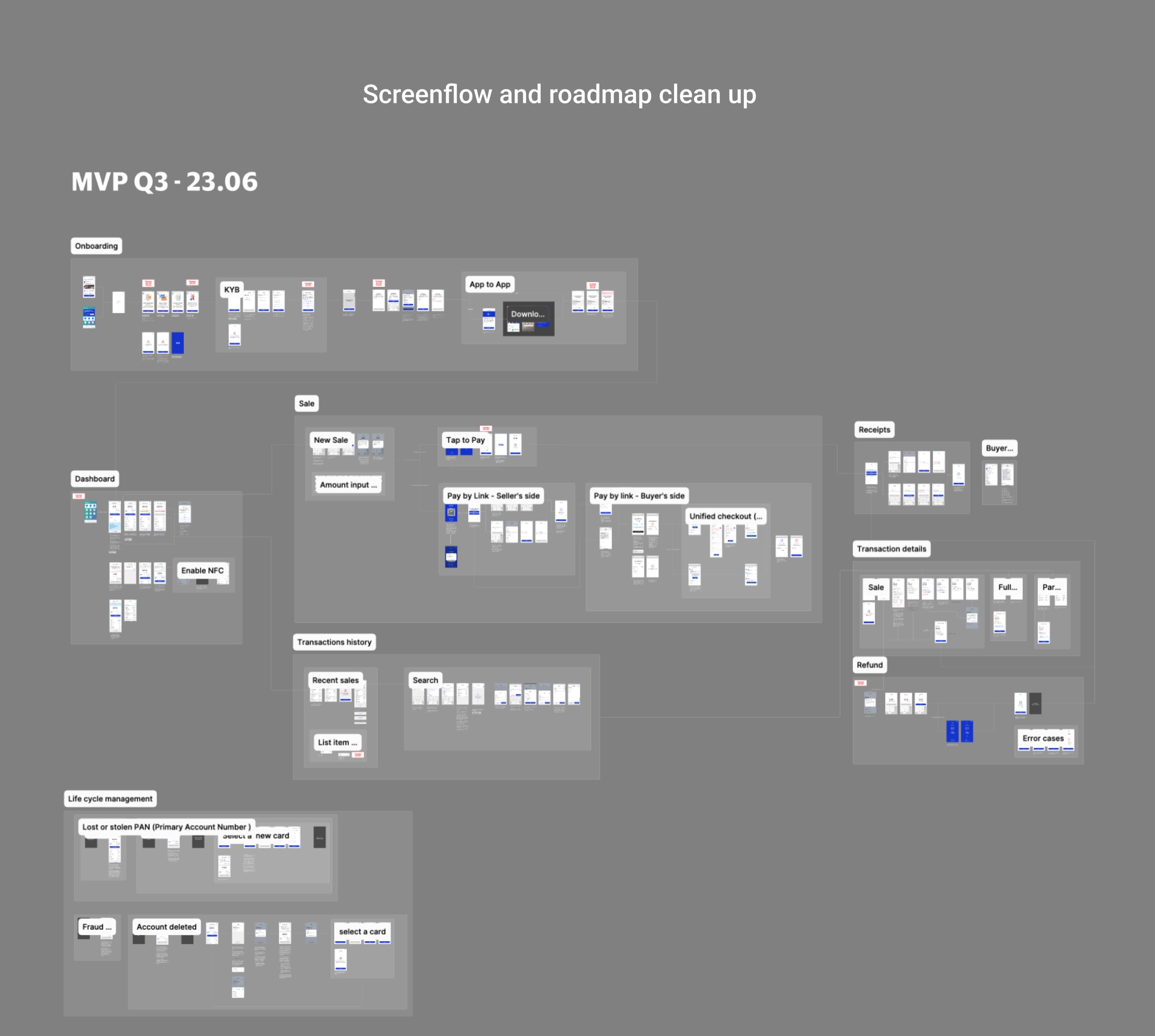
Design files, engineering progress, and planned functionality had gradually diverged, making it difficult for product, design, and engineering to understand what had actually been built and what still remained.
Without a reliable baseline, prioritizing new work became increasingly difficult.
My role
I led the effort to reconnect product strategy, design, and engineering by creating a single source of truth for the project.
My responsibilities included:
- Auditing existing product documentation
- Validating implemented functionality with engineering
- Identifying gaps between design and production
- Updating design specifications to reflect the current product
- Designing and documenting newly prioritized features
- Defining detailed user flows and implementation-ready specifications
- Collaborating with engineering and the incoming product manager throughout delivery
Establishing a reliable baseline
Before introducing new features, I worked closely with engineering to understand exactly what had already been implemented. This alignment allowed us to replace outdated documentation with an accurate representation of the product, giving the distributed team a shared understanding of the current state and enabling informed planning decisions.
Designing the next iteration
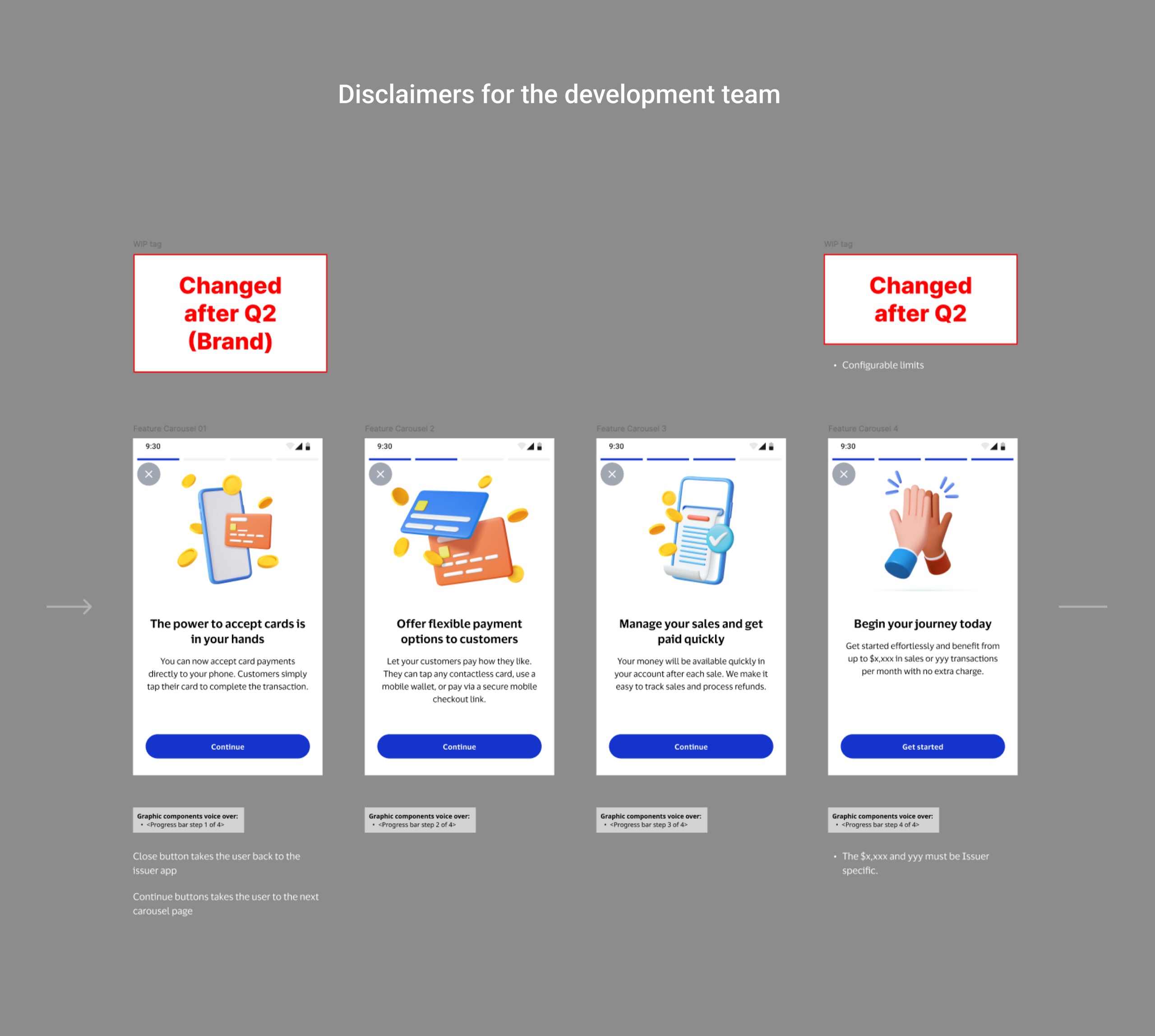
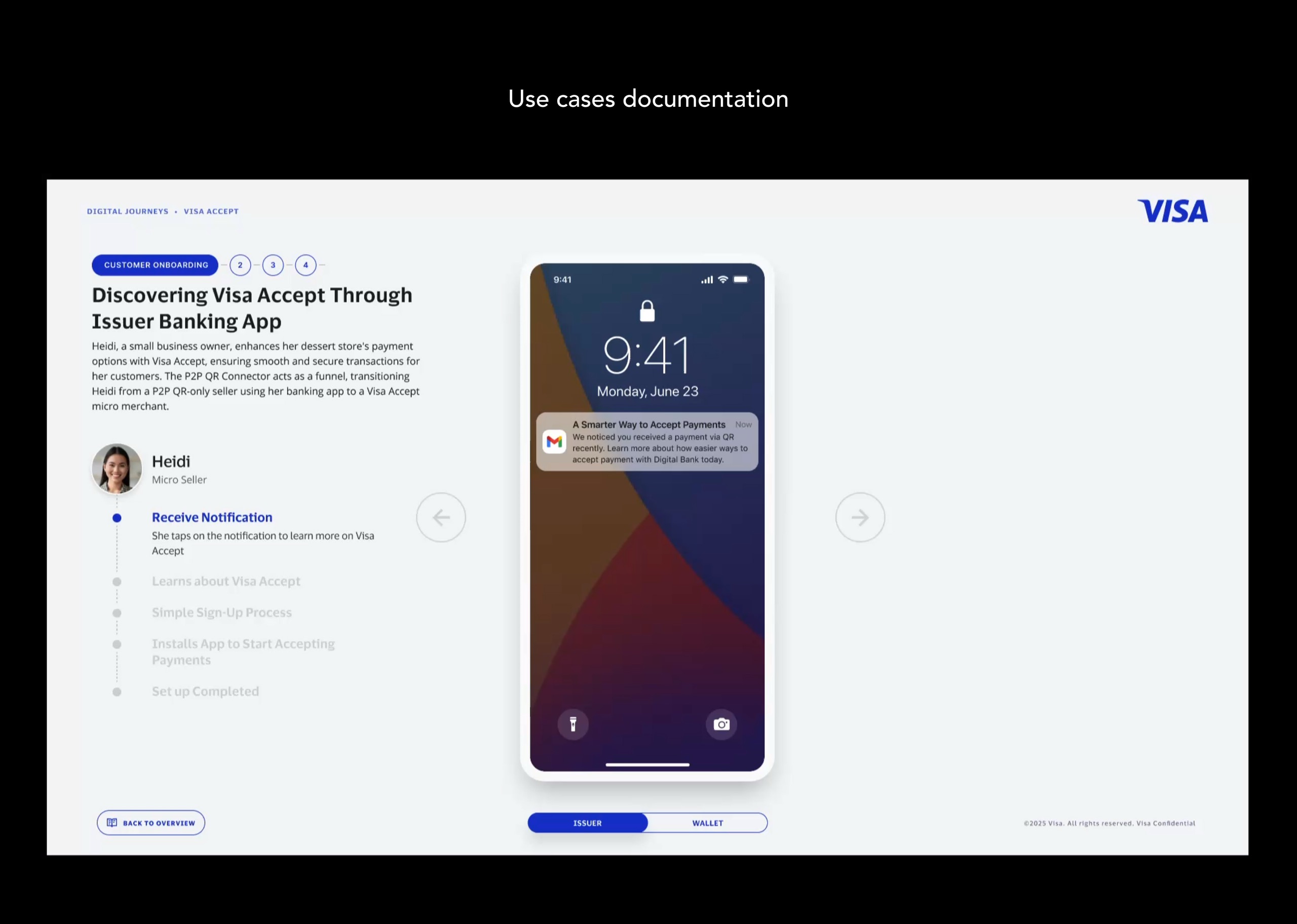
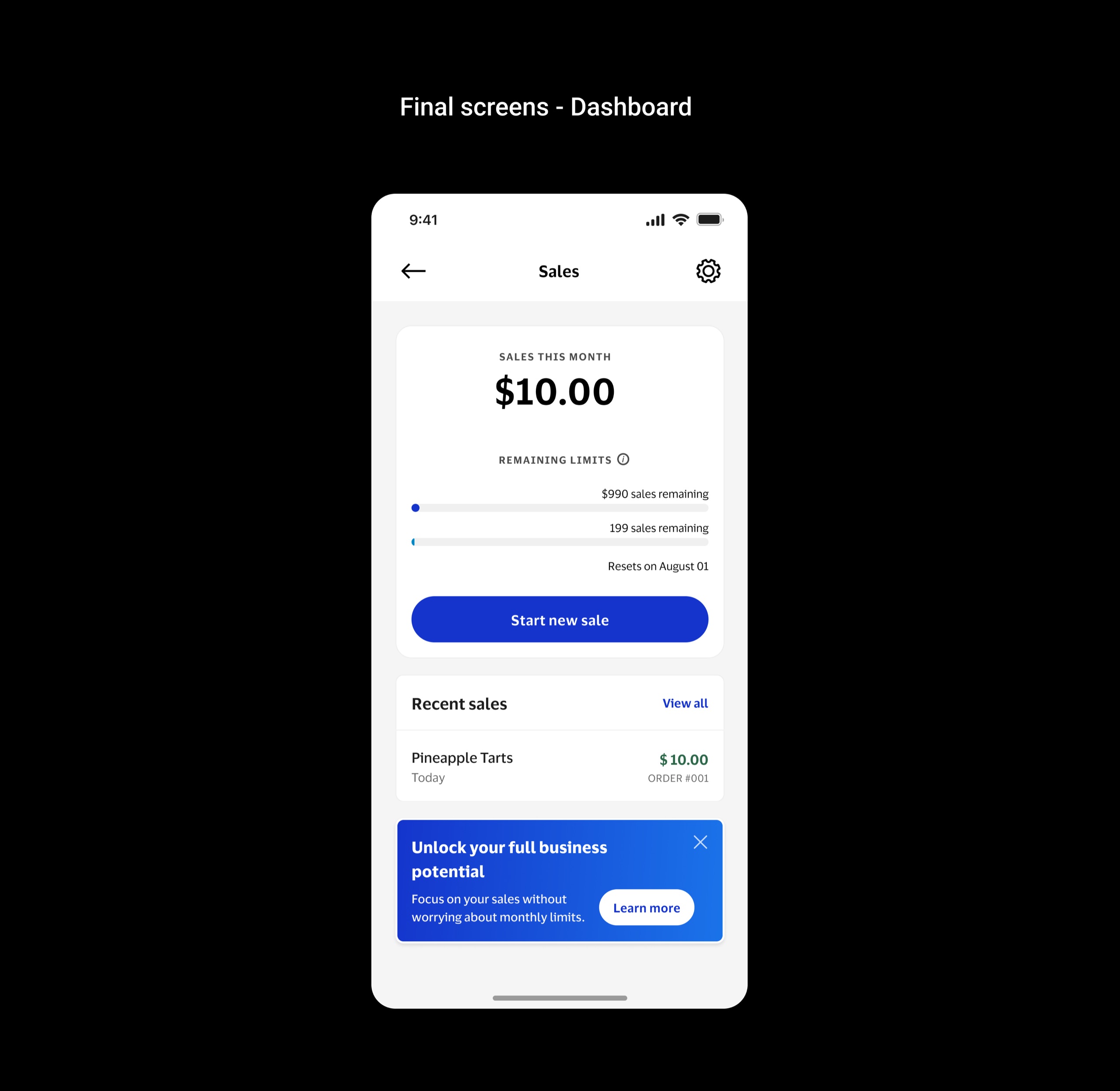
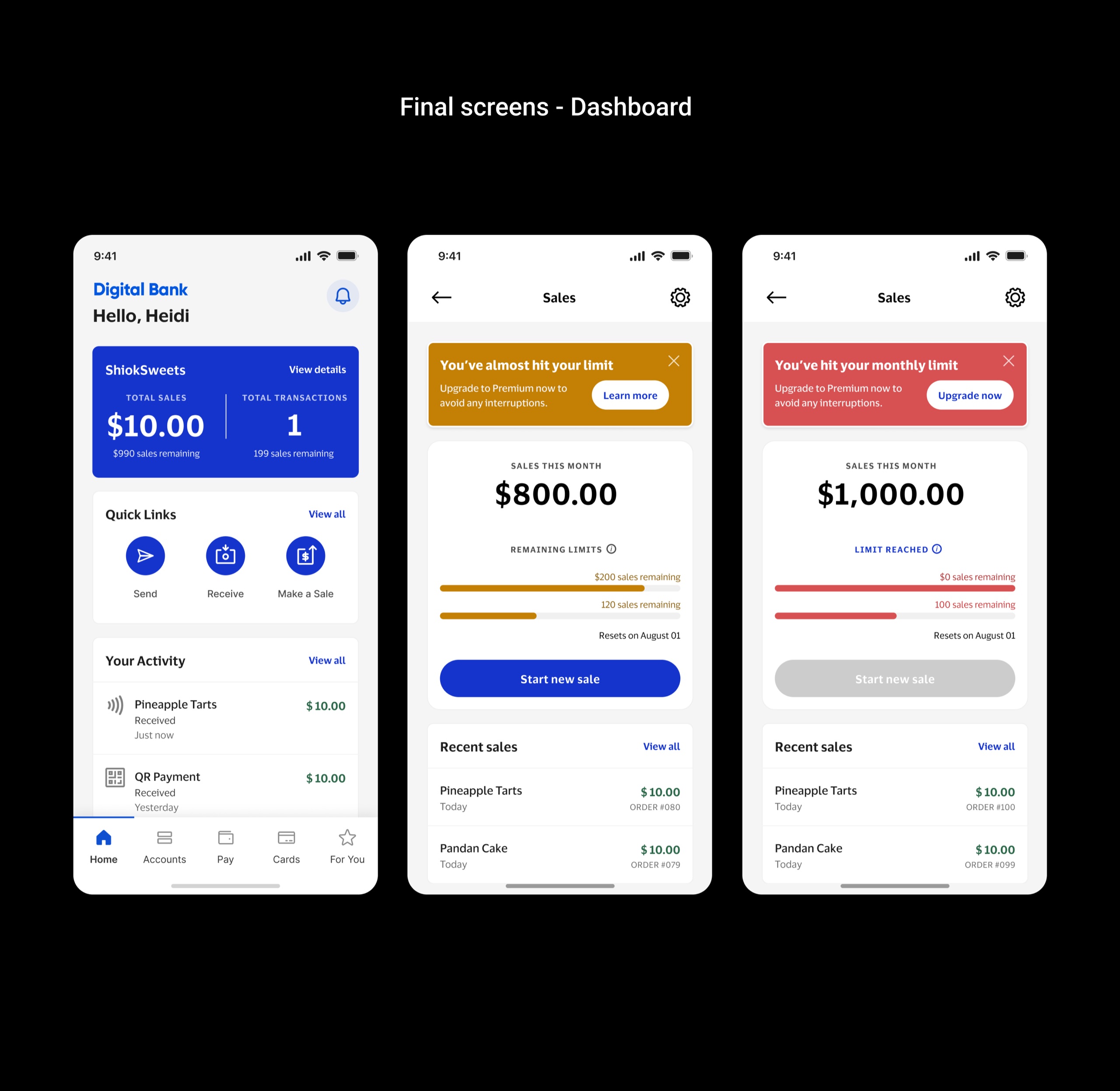
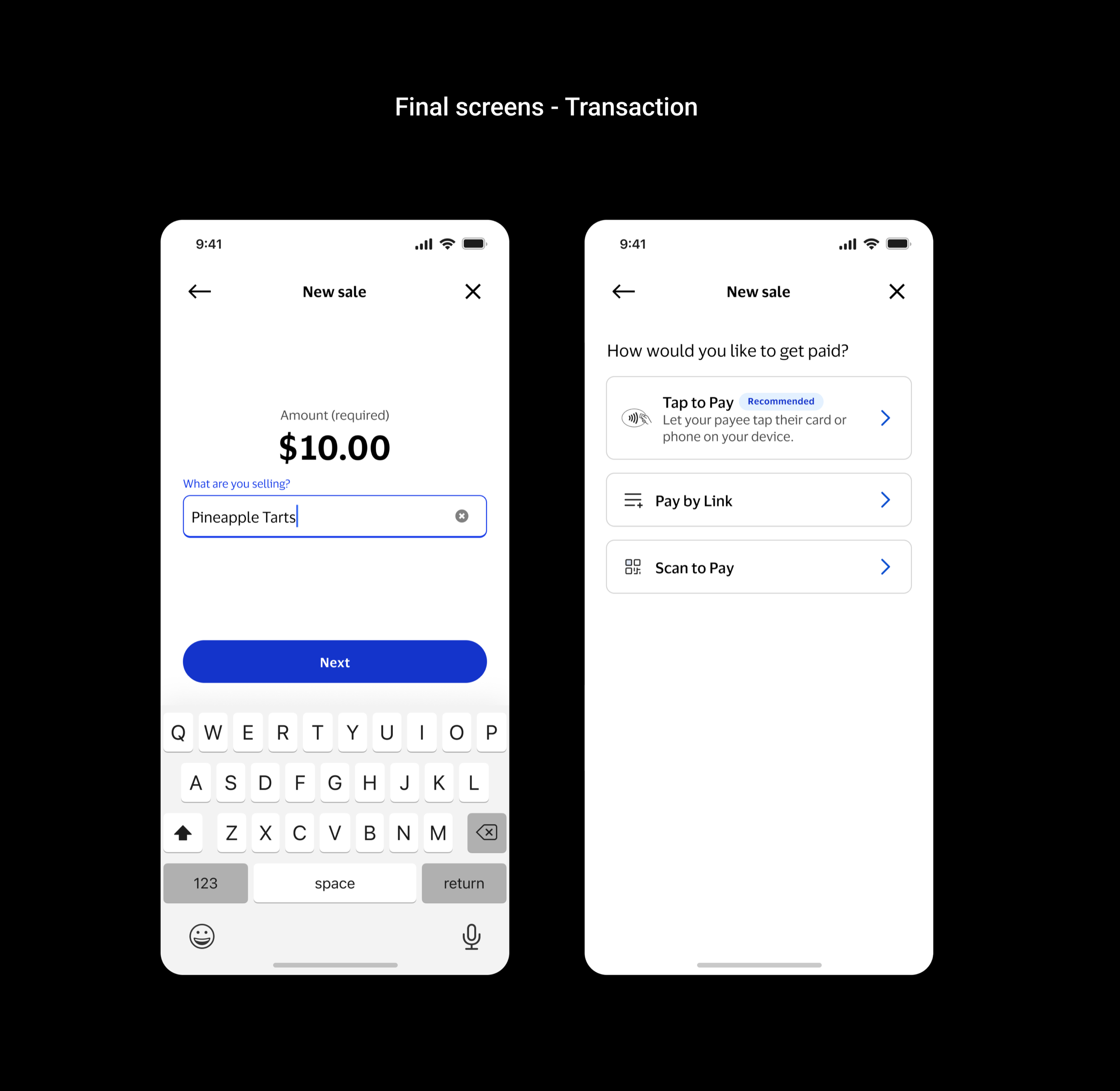
With a clear product baseline established, I shifted my focus to the next phase of development. Working alongside product management, I designed the prioritized features, refined end-to-end customer journeys, and produced implementation-ready specifications that could be handed directly to engineering despite our distributed workflow.
Supporting implementation
Throughout development, I continued collaborating with engineering to ensure designs translated accurately into production while maintaining consistency across multiple banking integrations and regional requirements.
Outcome
The project successfully reached a functional MVP that was piloted with banking partners in Vietnam and Guatemala. By first restoring visibility across product, design, and engineering before expanding the experience, the team was able to reduce uncertainty, prioritize development more effectively, and deliver a cohesive customer journey for Visa Accept’s initial launch.
Impact
- Established a reliable product baseline during a period of product ownership transition.
- Improved alignment between design, engineering, and product across three continents.
- Produced implementation-ready designs for the next phase of the product.
- Helped deliver Visa Accept’s MVP for pilot partners in Vietnam and Guatemala.